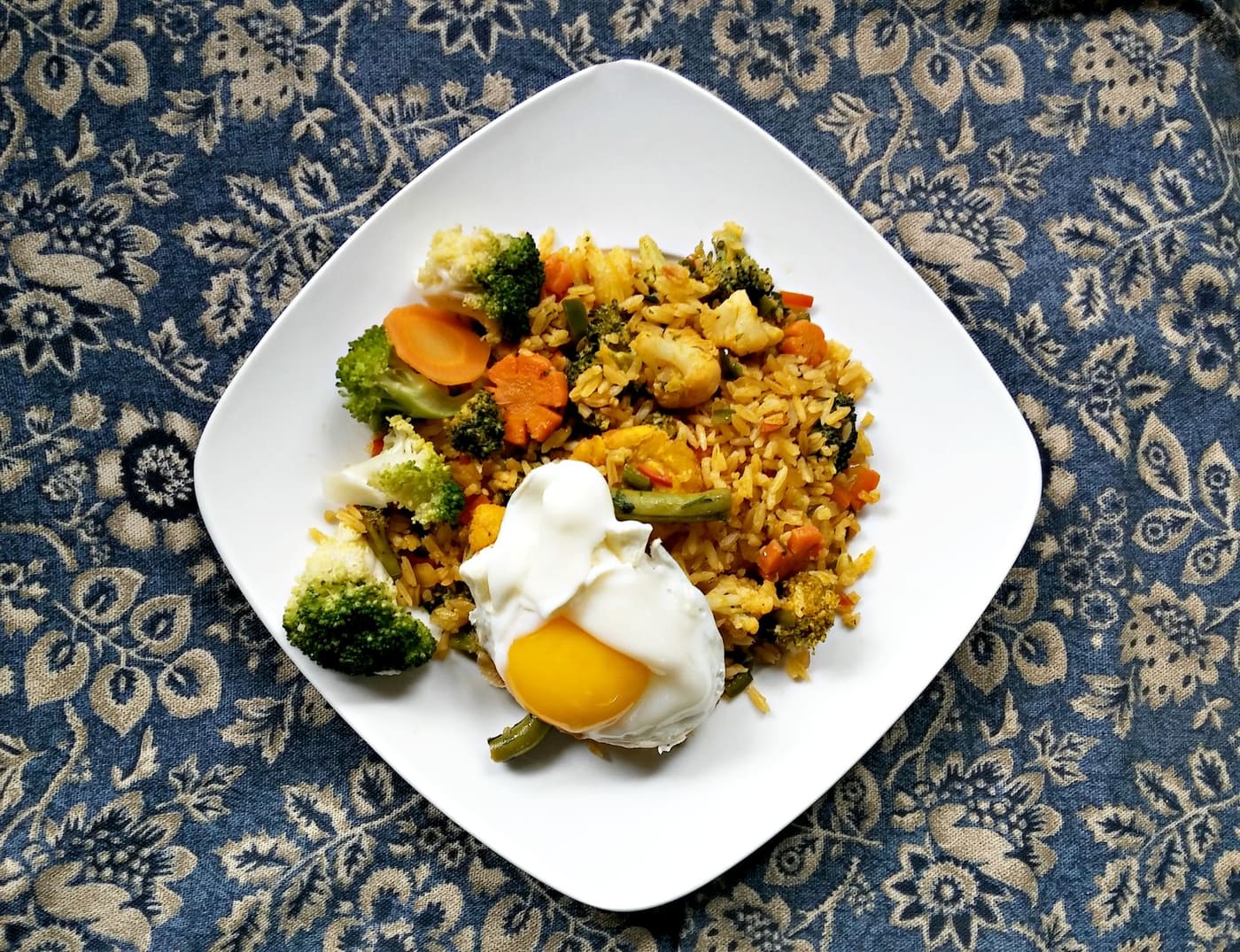
Cook the meals you currently order most often, in their simplest home version: a fried rice or noodle stir-fry, a quesadilla or taco night, a pasta with a pan sauce, and a sheet-pan chicken dinner. Those four cover most takeout cravings, take 20 to 40 minutes, and need only one skillet or one pan. Start with one of them twice in the first week instead of five different recipes, because repetition is what makes cooking faster.
Most people who quit takeout fail for the same reason: they pick recipes that are impressive instead of recipes that are quick. Takeout wins on a tired Tuesday because it asks for nothing. Your first home meals need to ask for almost nothing too. This guide walks through how to pick them, what to buy, and which dishes to learn in what order.
Start by looking at what you actually order
Before you buy anything, scroll through your last month of delivery orders. Write down the five dishes that appear most. For most people the list is some mix of pad thai or lo mein, burritos or tacos, pizza, burgers, a chicken-and-rice bowl, and curry.
Each of those has a home version that gets you most of the way there for a fraction of the effort:
| You usually order | Cook this first | Time | Rough cost per serving |
|---|---|---|---|
| Fried rice, lo mein | Egg fried rice or soy-garlic noodles | 20 min | $2-3 |
| Burritos, tacos | Ground beef or chicken tacos, or quesadillas | 20 min | $3-4 |
| Pizza | Flatbread or naan pizza | 15 min | $2-3 |
| Chicken bowl | Sheet-pan chicken thighs, rice, and vegetables | 40 min | $3-4 |
| Pasta | Spaghetti aglio e olio, or jarred-sauce pasta upgraded with garlic | 20 min | $1.50-2.50 |
| Curry | Coconut curry with canned chickpeas | 30 min | $2-3 |
Delivery fees, service charges, and tip are added on top of menu prices, so swapping even a few orders a week usually saves real money. Check your own receipts for the actual numbers; they are a good reason to push through the awkward first two weeks. The cost figures in the table are rough guesses and will vary by store and region.
Pick meals with three properties
Not every easy recipe is a good first recipe. Look for these:
- One pan or one pot. Dishes are the second biggest reason people go back to takeout. A 12-inch skillet, a sheet pan, or a 5-quart pot keeps cleanup to about ten minutes.
- Under 8 ingredients, mostly pantry or freezer. Rice, pasta, canned tomatoes, eggs, frozen vegetables, soy sauce, garlic, and onions are cheap, keep for weeks, and let you cook without a shopping trip.
- Forgiving timing. Chicken thighs stay juicy if you overcook them by five minutes; breasts do not. Fried rice does not care if the rice sits a minute. A delicate fish fillet does.
For a longer list of options that fit these rules, see easy meals you can cook without too much effort.
First meal: egg fried rice
This is the best first dish for anyone replacing Chinese takeout, and it teaches the most important stir-fry habit: high heat and dry ingredients.
Cook 1 cup of long-grain rice a day ahead (or use leftover rice) and spread it on a tray to cool. Cold, dry rice fries into separate grains. Fresh hot rice turns gummy.
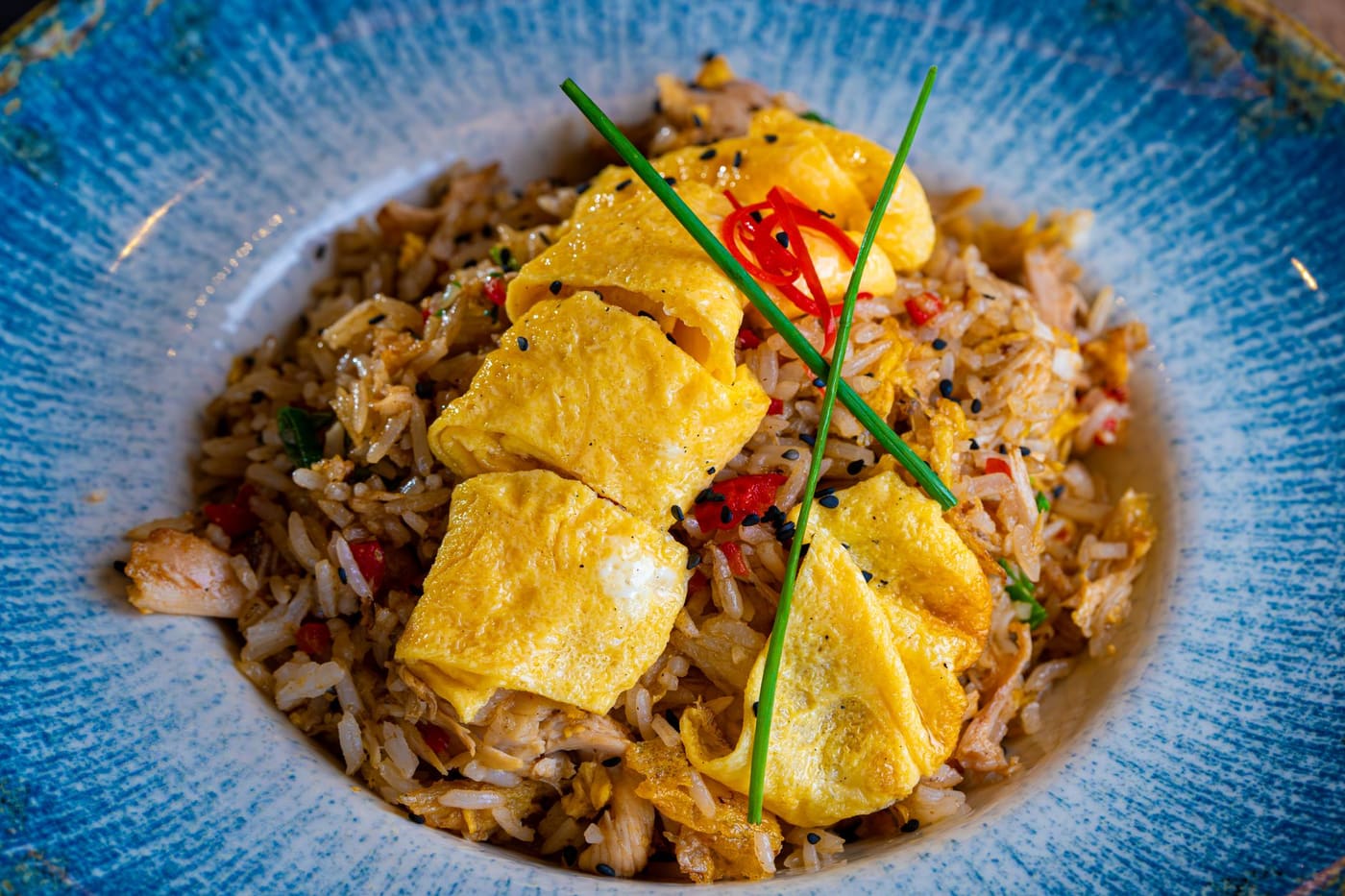
- Prep first. Chop 3 scallions, mince 2 garlic cloves, and beat 2 eggs. Cooking this fast means you cannot chop mid-stir-fry. This habit is called mise en place, and it is the biggest difference between calm cooking and chaos.
- Heat a 12-inch skillet or wok over medium-high heat until a drop of water evaporates in a second or two. Add 1 tablespoon of neutral oil such as canola or avocado.
- Scramble the eggs for about 30 seconds, then push them aside.
- Add the rice and press it into the pan. Let it sit 1 to 2 minutes without stirring so some grains brown, then toss. Add 1 cup frozen peas and carrots, the garlic, and 1 to 2 tablespoons soy sauce.
- Finish with the scallions and a few drops of sesame oil.
It takes about 15 minutes once the rice is cooked, and the ingredients are inexpensive.
Second meal: a sheet-pan dinner
Sheet-pan chicken is the closest thing to a takeout “set it and forget it” meal. Toss 1.5 pounds of bone-in, skin-on chicken thighs and 1 pound of chopped vegetables (broccoli, potatoes cut into 3/4-inch pieces, or red onion) with 2 tablespoons oil, salt, and pepper. Roast on a rimmed half-sheet pan at 425F (220C) for 35 to 45 minutes.
Two details matter. First, do not crowd the pan. Vegetables that touch each other steam instead of brown, so use two pans if needed. Second, use an instant-read thermometer. The safe minimum for chicken is 165F (74C), checked in the thickest part without touching bone. Many cooks take thighs a bit higher for texture because the connective tissue softens with more time, but 165F (74C) is the food safety line.
The browned, savory crust on the chicken skin and vegetable edges comes from the Maillard reaction, which gets going around 300F (150C). That is why a hot oven beats a moderate one for this dish.
Third meal: pasta with a pan sauce
Pasta replaces a lot of delivery orders, and it teaches deglazing, a technique you will use constantly.
Cook 8 ounces of spaghetti in well-salted water (about 1 tablespoon of kosher salt per 4 quarts) until a minute short of the package time. Meanwhile, in a skillet, cook sliced garlic in 3 tablespoons olive oil over medium-low heat for about 1 minute, until pale gold. Add a pinch of chili flakes. Move the pasta straight into the skillet with a splash of the starchy cooking water, and toss over medium heat for a minute. The starch and oil combine into a light sauce that clings to the noodles.
To try deglazing, brown some sausage or mushrooms first. The browned bits stuck to the pan are called fond. Pour in a quarter cup of white wine, broth, or even water and scrape the pan with a wooden spoon. The liquid dissolves the fond into a sauce with real depth.
Make one weekend batch to close the weeknight gap
Takeout tends to happen at 6:30 p.m. when no food is ready. Closing that gap matters more than any single recipe. Pick one batch item on Sunday:
- A pot of rice, or a pound of dry pasta cooked and refrigerated.
- A tray of roasted vegetables.
- A pound of ground beef or turkey browned with onion and taco seasoning. Ground meat is safe at 160F (71C).
- A big pot of soup or chili.
Refrigerated leftovers keep 3 to 4 days in airtight containers, so cook for Monday through Thursday and freeze anything beyond that. Refrigerate cooked rice and other leftovers within 2 hours (1 hour if the room is above 90F). Rice left out for hours can grow bacteria whose toxins survive reheating.
If you want a system for this, how to plan meals for the week without overcomplicating it walks through a light-touch approach with two or three planned dinners instead of seven.
Buy only the tools that remove friction
You do not need a full kitchen. For the meals above, the useful kit is:
- An 8-inch chef’s knife and a plastic or wood cutting board.
- A 12-inch skillet, stainless steel or cast iron, plus a 5-quart pot.
- A rimmed half-sheet pan.
- An instant-read thermometer.
Dull knives are the usual reason chopping feels like a chore, so a sharp knife is the first upgrade. What kitchen tools are actually worth buying for a beginner covers what to skip.
Fix the flavor problem early
The other common reason people quit is that home food tastes flat compared with restaurant food. That is usually a seasoning and heat problem, not a recipe problem. Salt in layers as you cook, finish with acid (a squeeze of lime or a splash of rice vinegar), and let the pan get hot enough to brown things. If your food still tastes dull, why your food still tastes bland even when you season it explains the common causes.
It also helps to understand a few core methods, such as sauteing, roasting, and boiling, before you chase new recipes. Cooking methods every beginner should understand first is a good starting point.
A realistic first three weeks
Do not aim to eliminate takeout overnight. A workable ramp:
- Week 1: Cook dinner three nights. Repeat fried rice and one sheet-pan meal. Keep one takeout night, and enjoy it.
- Week 2: Cook four nights. Add the pasta and tacos. Prep one batch item on Sunday.
- Week 3 onward: Add one new recipe per week and keep the ones you liked.
Keep two emergency meals stocked at all times, such as frozen dumplings and a box of pasta with a jar of sauce. A meal that takes ten minutes beats a delivery order that takes forty.
Where this comes from
Cooking temperatures, rice handling, and leftover storage follow the US government’s FoodSafety.gov safe minimum temperature chart and USDA leftover guidance. The meal ideas and ramp-up plan are common home-cooking advice, not a tested program. Costs are rough and vary by store and region, so compare against your own delivery receipts and grocery prices.