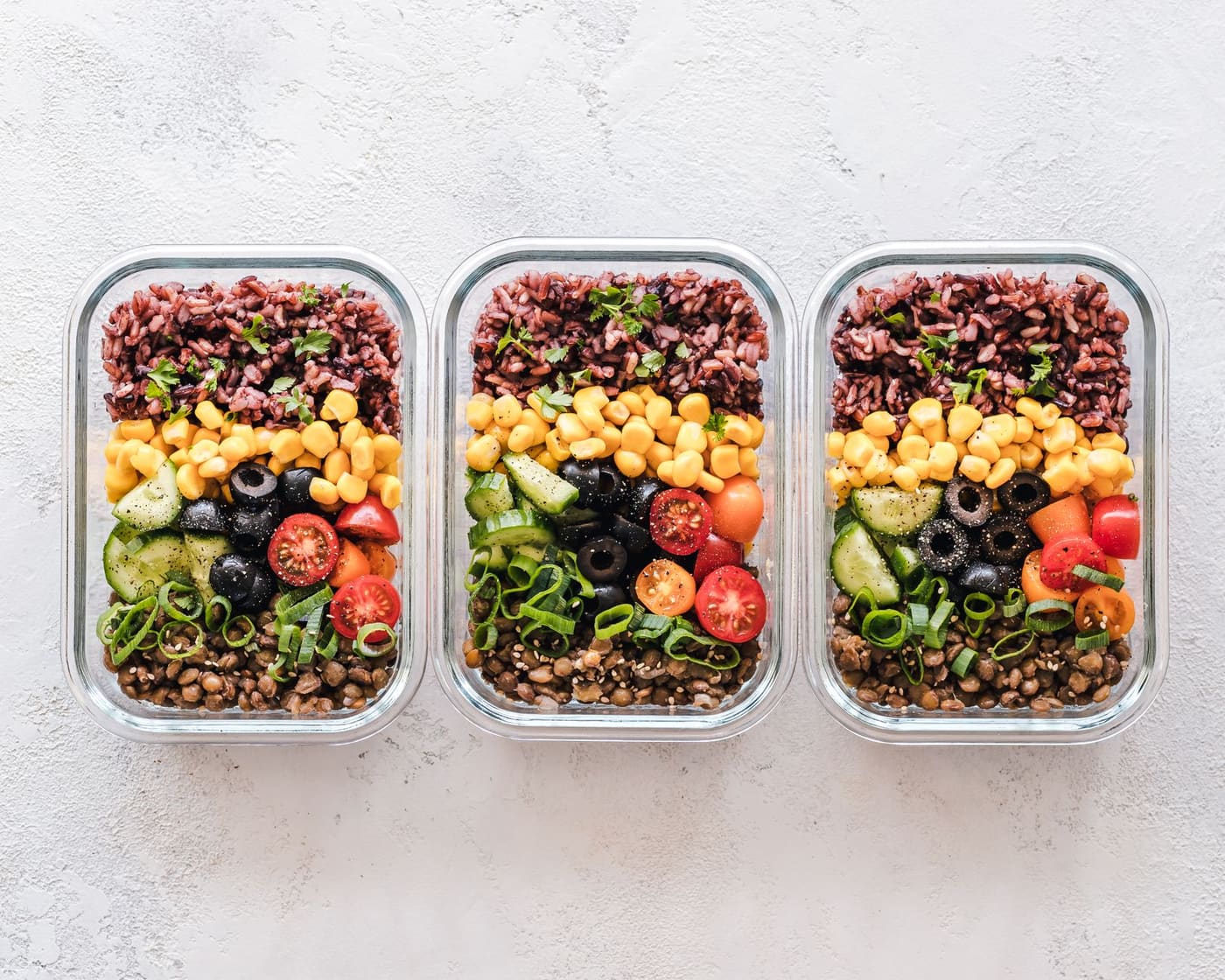
Plan three to four dinners, not seven, and build them from a short list of shared ingredients. Add one planned leftover night and one flex night, shop once from a list that matches the plan, and cook one or two components ahead on the weekend. That is the whole system. Everything below is about making it hold up when the week gets busy.
Most plans fail because they are too ambitious: seven different recipes, seven new ingredient lists, and no room for a late night at work. A plan that is a little loose beats a perfect one you abandon on Wednesday. If that has already happened to you, why meal planning falls apart by midweek covers the usual causes in more detail.
Start with how many nights you actually cook
Look at the coming week before you open a single recipe. Count the nights you will realistically be home with 30 or more minutes to cook. Mark any night with a commitment, a late meeting, or plans to eat out. Most people land on three to five real cooking nights.
Plan for that number, then add a buffer:
- 3 to 4 cooking nights: dinners you cook from scratch.
- 1 leftover night: you reheat food from earlier in the week.
- 1 flex night: frozen pizza, eggs on toast, a takeout night, or a fridge clear-out.
- Weekends: plan one meal at most, and leave the rest open.
Writing “flex” on the calendar sounds minor, but it is what keeps the plan from collapsing when a night goes sideways. You are not failing when you use it. It is part of the plan.
Build around anchors, not recipes
An anchor is a bulk-cooked item that shows up in two or three meals. Pick one protein and one starch or grain, then vary the sauce and the vegetables.
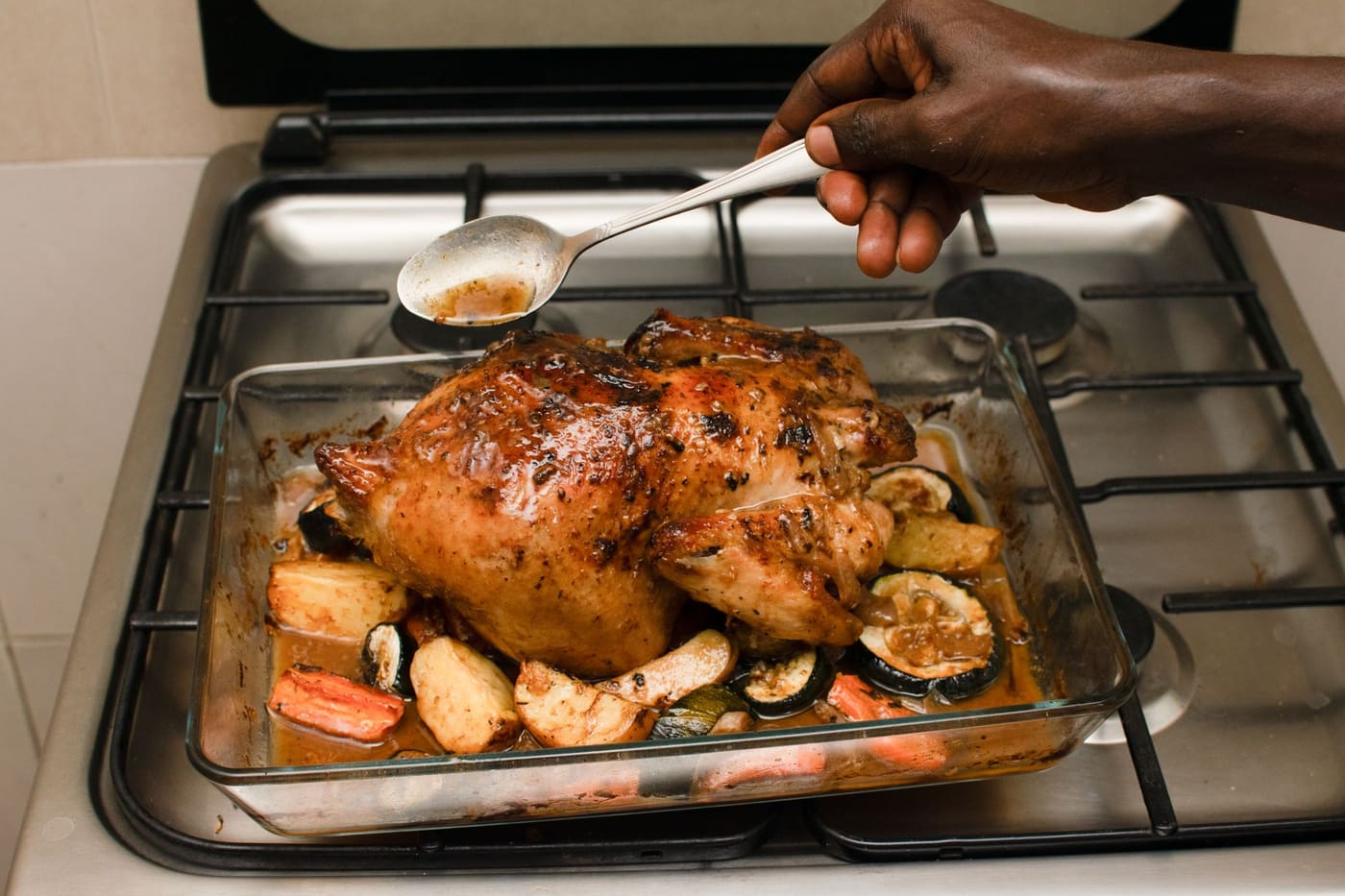
Here is a sample set for a household of two:
- Sunday: roast a 4 to 5 pound whole chicken at 425F (220C) for 60 to 75 minutes, until the thickest part of the thigh reads 165F (74C) on an instant-read thermometer. Rest it 15 minutes before carving.
- Monday: chicken tacos from the leftover meat with warm tortillas, shredded cabbage, and lime.
- Wednesday: fried rice using the last of the chicken and day-old rice.
- Thursday: simmer the carcass for stock, about 2 hours with an onion, a carrot, and a celery stalk, then make soup.
One whole chicken covered three dinners and a stock. That is the logic of anchors: one real cooking session, several meals.
Other anchors that work the same way:
- A 3 pound pork shoulder, braised or slow cooked until fork tender (pork is safe at 145F/63C with a 3 minute rest, but cuts meant for shredding are usually cooked well past that until fork tender).
- A big pot of dried beans or two to three cans of beans.
- A sheet pan of roasted vegetables.
- A 2 cup batch of uncooked rice, which makes about 6 cups cooked.
Use overlap to keep the grocery list short
Overlap means the same ingredient appears in more than one meal. It cuts your list, lowers waste, and means you are never stuck with half a bunch of cilantro and no plan for it.
Pick a handful of flexible ingredients and use them several ways:
| Ingredient | Meal 1 | Meal 2 | Meal 3 |
|---|---|---|---|
| Yellow onions | Base for soup | Sauteed for tacos | Fried rice |
| Cabbage (half head) | Slaw for tacos | Stir-fried | Soup add-in |
| Eggs (dozen) | Fried rice | Breakfast for dinner | Hard-boiled lunch |
| Canned tomatoes (28 oz) | Pasta sauce | Chili base | Shakshuka |
| Lemons | Roast chicken | Dressing | Finishing soup |
Buying the same 10 to 12 core items each week also makes shopping faster, because you learn where they sit in the store and what they cost. Staples like rice, pasta, canned tomatoes, onions, garlic, eggs, and frozen vegetables rarely need replanning.
Make a plan that fits on one page
You do not need an app or a binder. A sticky note on the fridge works. Write the days, the dinner, and one line about prep. For example:
- Mon: chicken tacos (shred chicken, warm tortillas, slice cabbage)
- Tue: pasta with jarred sauce plus a bag salad (15 minutes)
- Wed: fried rice (rice should be cooked the day before)
- Thu: leftovers
- Fri: flex
That is enough. If you want something with more structure, the meal planning tool comparison lays out the options, from plain notes apps to dedicated planners. Pick the tool you will actually open, not the one with the most features.
Do one short prep session
A prep session is mise en place for the whole week: doing the repeatable work once so each weeknight takes less effort. Aim for 45 to 60 minutes, not a three-hour marathon.
A reasonable first session:
- Cook a pot of rice or grains (about 20 minutes, mostly unattended).
- Roast a sheet pan of vegetables at 425F (220C) for 25 to 30 minutes. Cut them roughly the same size so they cook evenly.
- Wash and dry greens, wrapped in a paper towel inside a container.
- Chop onions and store them in an airtight container in the fridge for a few days.
- Make one sauce or dressing, such as a lemon, olive oil, and mustard vinaigrette.
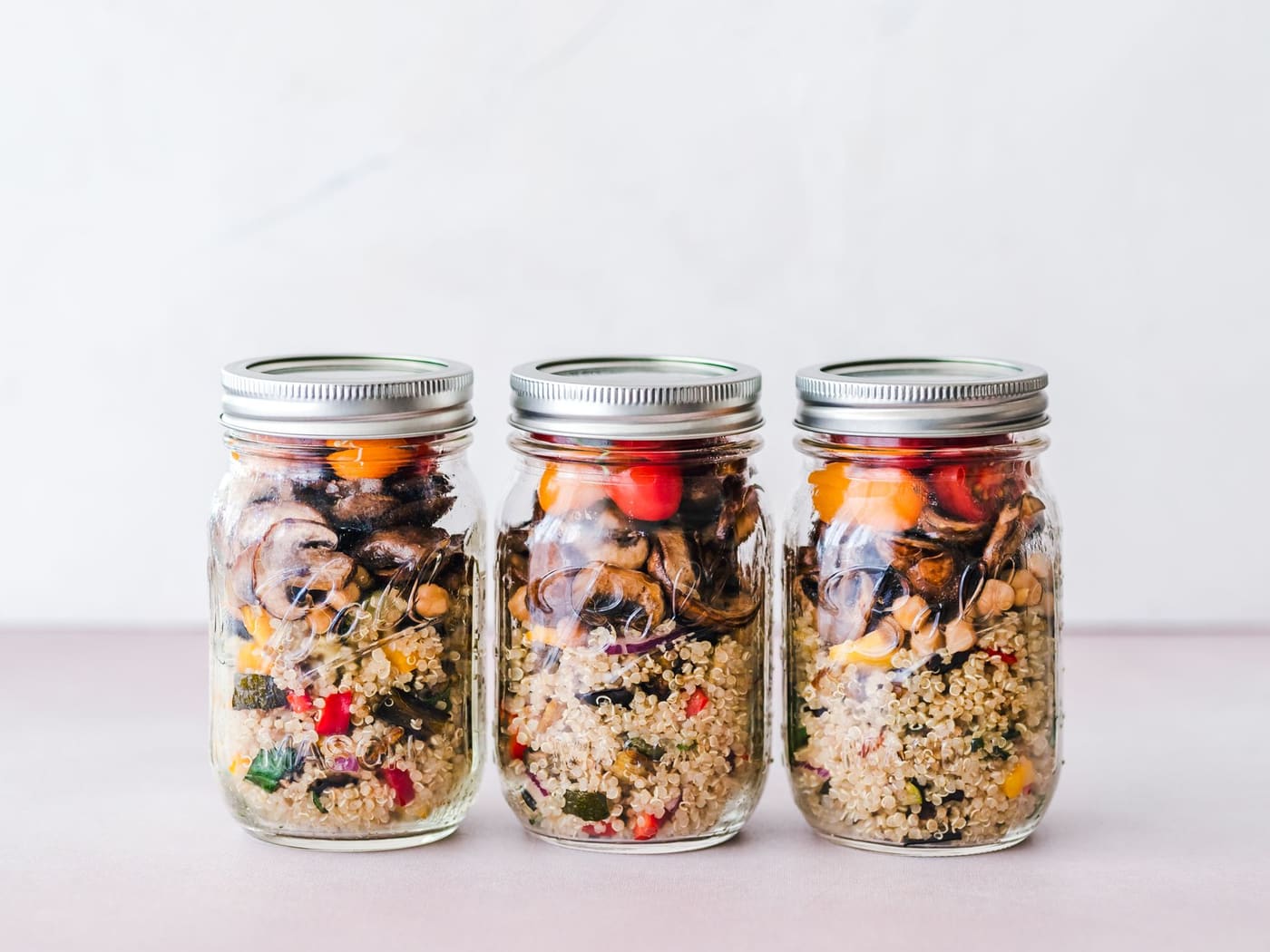
Get cooked food into shallow containers and into the fridge within 2 hours (1 hour if the room is above 90F). Refrigerated leftovers are good for 3 to 4 days at 40F (4C) or below. If a meal will not be eaten by Thursday, freeze it on day one, not day four. When you reheat, bring leftovers to 165F (74C).
You do not need much gear for this. A sharp 8-inch chef’s knife, a large cutting board, two rimmed sheet pans, and a set of 6 to 8 glass or plastic containers cover nearly all of it. The kitchen tools worth buying for a beginner article explains what is worth the money and what is not.
Choose meals you already know how to cook
Weeks go better when most of the plan is food you can make without reading a recipe twice. Fill three of your four cooking nights with dependable meals and use the fourth to try something new. That ratio keeps the plan from feeling like homework.
Good default categories to rotate:
- Pasta night: boil in water salted to taste like mild seawater, about 1 tablespoon of kosher salt per 4 quarts, and finish the pasta in the sauce with a splash of starchy water.
- Sheet pan dinner: bone-in chicken thighs and potatoes at 425F (220C) for 35 to 45 minutes, until thighs reach 165F (74C).
- Skillet meal: sear in a 12-inch stainless or cast iron skillet, then build a quick pan sauce from the fond by deglazing with stock or wine.
- Soup or chili: a pot that makes six servings and freezes well.
- Egg-based dinner: frittata, omelets, or fried eggs over rice.
If you need ideas that do not take much effort, easy meals you can cook without too much effort is a good place to build your rotation. If you are trying to cut back on takeout specifically, what to cook first if you are trying to stop ordering takeout gives you a starting lineup.
Budget and shopping without a spreadsheet
You do not need to track every dollar, but a rough target helps. For a two-person household, a plan built on chicken, rice, beans, eggs, pasta, and seasonal vegetables can often land in the $60 to $90 range per week, depending on where you live and shop. Prices vary a lot, so treat that as a rough guide and not a promise.
A few habits keep costs down:
- Check what you have first. Look in the fridge, freezer, and pantry before writing the list.
- Shop once. A second midweek trip usually adds impulse purchases.
- Group the list by store section: produce, meat, dairy, pantry, frozen. You will walk the store once instead of doubling back.
- Buy larger packs of proteins and freeze portions. Chicken thighs, ground beef, and pork shoulder freeze well in 1 pound portions.
- Thaw in the fridge, not on the counter. The USDA’s rule of thumb is about 24 hours per 4 to 5 pounds, so small packages are usually ready overnight.
Ground meat should reach 160F (71C), and whole cuts of pork or beef need 145F (63C) followed by a 3 minute rest. An instant-read thermometer removes the guessing.
Keep it flexible when the week changes
Even a good plan needs adjusting. Use these rules so a change does not turn into a reset:
- Swap, do not skip. If Tuesday falls through, move the meal to Wednesday and push the rest back.
- Keep two emergency meals in the pantry or freezer, such as pasta with canned tomatoes, or eggs and frozen vegetables over rice.
- Cook the perishable items first. Fish and fresh greens go early in the week, and hardy items like cabbage, carrots, and potatoes go later.
- Review on Sunday. Take two minutes to note what got eaten and what got thrown out, then adjust next week’s quantities.
Cooking is a skill that improves with repetition, and planning supports that. If you want to build skills while you plan, how to get better at cooking without making it a whole project shows how to do it one small step at a time.
To lay the week out and build a grocery list as you go, use the weekly meal planner.
Where this comes from
Storage, thawing, and cooking temperature figures come from the USDA’s food safety guidance on leftovers and safe thawing and the FoodSafety.gov safe minimum temperature chart. The planning method itself is common-sense kitchen practice, not a tested system, and the weekly budget range is a rough guide only. Prices change and vary by region, so check your own store.