Most meal plans fall apart by Wednesday because they assume you will have the same time, energy, and appetite on Thursday that you had on Sunday when you wrote the plan. They also tend to schedule too many dinners that start from raw ingredients, ignore the leftovers already in the fridge, and leave no room for a night that goes sideways. The fix is not more discipline. It is a plan with fewer moving parts, a couple of built-in escape hatches, and some prep done before the week gets busy.
Below are the specific places plans break, and what to change in each one.
You planned for your Sunday self, not your Wednesday self
On Sunday you have a full fridge, a clear head, and an hour to spare, so a plan with seven different cooked dinners looks easy. By Wednesday you have worked three long days, the fresh produce has started to wilt, and a dinner that needs 50 minutes of active cooking feels like a second job.
A useful test is to rate each night before you assign a meal to it:
- Low-energy nights: work runs late, you have an evening commitment, or you simply know you will be tired. Assign 15 minutes or less of active cooking.
- Medium nights: you can manage 25 to 30 minutes of cooking and one pan or pot.
- High-energy nights: usually one weekend day. This is the only night for a braise, a roast, or anything with several components.
Most weeks have one or two high-energy nights, not five. If your plan has a braise on Tuesday and fresh pasta on Thursday, it was written for a week that does not exist.
Too many recipes means too many ingredients
A plan with seven unrelated recipes means seven sets of ingredients, and a bigger shopping bill once you count one-off items like fish sauce, a bunch of cilantro, and a jar of tahini. Each of those one-off purchases is a small tax on your motivation. A half-used bunch of herbs wilting in the crisper becomes a reminder of a meal you did not make.
A tighter plan overlaps ingredients on purpose:
- One bunch of cilantro serves tacos on Monday and a rice bowl on Thursday.
- One head of cabbage covers a stir-fry, a slaw, and a topping for tortillas.
- One 3 to 4 pound whole chicken or a pack of bone-in thighs can feed three different meals.
Aim for 3 to 4 core proteins, 2 to 3 starches, and a rotation of vegetables, rather than building each dinner from a blank page. If you want a structure for this, the approach in how to plan meals for the week without overcomplicating it is built around exactly this kind of overlap.
Leftovers are not in the plan
Many plans list seven dinners for seven nights and never mention that Monday’s chili will produce four servings when you needed two. The result is a fridge full of containers while a new dinner is scheduled anyway, so you either cook twice or let food go bad.
Build leftovers into the schedule on purpose:
- Cook a large batch on your high-energy night, such as a 3 pound pork shoulder or a 6-quart pot of soup.
- Assign the first leftover meal to the very next night.
- Mark one night per week as a “fridge clean-out” with no assigned recipe.
Keep food safety in mind. Refrigerate cooked food within 2 hours (1 hour if the room is above 90F). Cooked leftovers are good in the fridge (at or below 40F / 4C) for 3 to 4 days, so anything you will not eat by Thursday should go in the freezer on Monday or Tuesday. When you reheat, bring leftovers to 165F / 74C. An instant-read thermometer takes the guesswork out of that and also helps you avoid overcooking fresh meat. If you are weighing tools, what kitchen tools are actually worth buying for a beginner covers where a thermometer ranks.
Every dinner starts from scratch
Cooking from scratch is slower mainly because of the prep, not the heat. Chopping an onion, mincing garlic, and trimming vegetables can take 15 minutes before anything touches a pan. If all that happens at 6:30 p.m. on a tired weeknight, the plan loses.
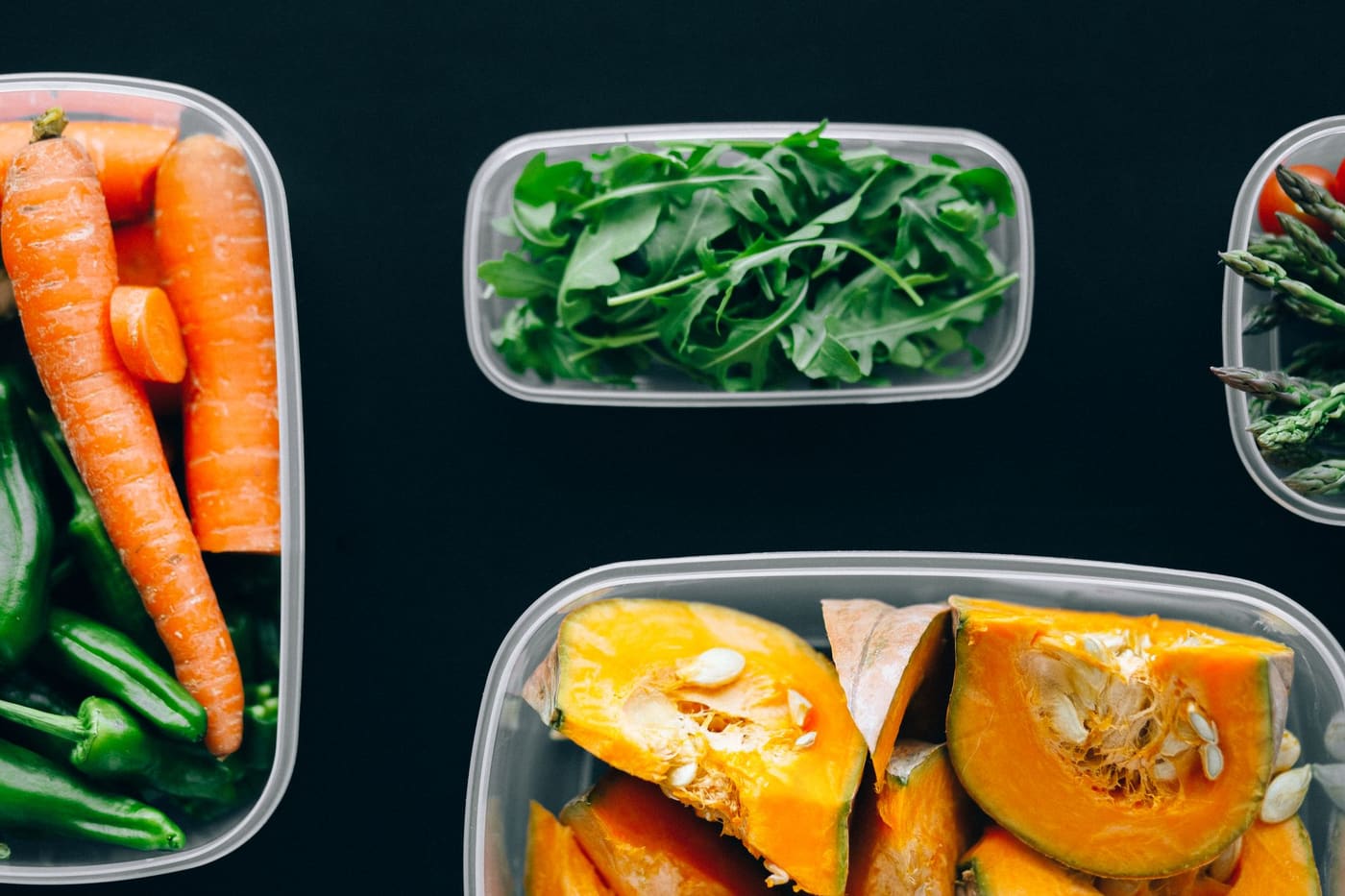
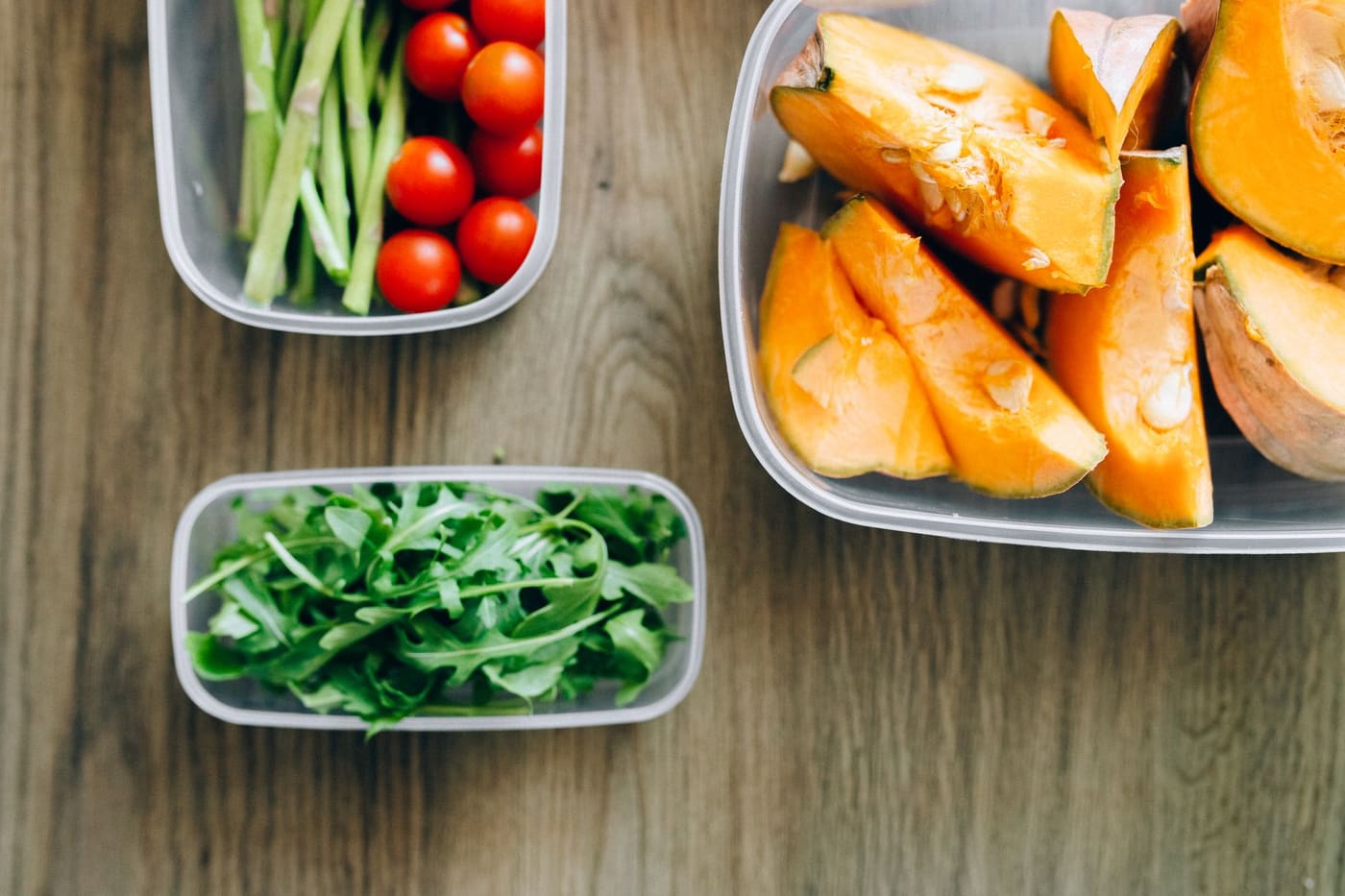
This is where mise en place helps, applied to the whole week instead of a single recipe. Spend 45 to 60 minutes on Sunday doing the tasks that do not spoil quickly:
- Wash and chop sturdy vegetables like carrots, celery, onions, and bell peppers (they hold for several days in sealed containers in the fridge).
- Cook a pot of rice or other grain (about 1 cup dry rice makes about 3 cups cooked) and refrigerate it within 2 hours.
- Roast a sheet pan of vegetables at 425F / 220C for 25 to 30 minutes.
- Make one sauce or dressing, such as a vinaigrette with 3 parts oil to 1 part acid.
- Cook a protein in bulk, like 2 pounds of chicken thighs baked at 425F / 220C until they reach 165F / 74C.
Delicate items like fresh herbs, avocado, and leafy greens should wait until the day you use them. Prepping them early is a common reason people give up on prep altogether, because they open the container on Wednesday and find slime.
No backup plan for bad nights
Every week has at least one night where the plan does not survive: a late meeting, a sick kid, a skipped grocery trip. Without a fallback, the default is takeout, and one takeout night often turns into three because the planned ingredients are now a day or two older.
Keep a short list of “emergency dinners” that use pantry and freezer staples only:
| Backup meal | Core ingredients | Time |
|---|---|---|
| Pasta aglio e olio | Spaghetti, garlic, olive oil, chili flakes | 15 min |
| Fried rice | Leftover rice, 2 eggs, frozen peas, soy sauce | 12 min |
| Quesadillas | Tortillas, shredded cheese, canned beans | 10 min |
| Egg scramble with toast | Eggs, bread, any leftover vegetable | 10 min |
| Frozen dumplings | Pan-fried, with a simple dipping sauce | 15 min |
Having these ingredients on hand means a failed night costs you a few dollars of groceries you already own instead of a delivery order. If you are trying to cut back on ordering out, what to cook first if you are trying to stop ordering takeout has a realistic order to build these habits in.
The meals are boring or hard to want
Plans also fail when the food itself is not appealing by day three. Chicken breast and steamed broccoli every night is a plan designed to be abandoned. Boredom usually has two causes: the same flavors repeated, and food that tastes flat.
You can fix the first by changing the sauce or seasoning on a shared base. A batch of roasted chicken thighs can be Mexican-style on Monday (cumin, lime, cilantro), Italian-style on Wednesday (lemon, oregano, olive oil), and Asian-style on Friday (soy, ginger, sesame oil). The second problem comes from technique, not a lack of recipes. Browning meat properly through the Maillard reaction (a pan at roughly 400 to 450F / 205 to 230C, dry meat, no crowding) builds flavor that a plain boiled or steamed dish never has. If your food keeps coming out dull, how to make food taste better with basic ingredients walks through salt, acid, fat, and browning in plain terms.
Choosing the right format: rigid schedule or flexible menu
Not everyone should plan by assigning a specific meal to a specific day. Compare the two common approaches:
| Fixed day-by-day plan | Flexible menu | |
|---|---|---|
| How it works | Monday is tacos, Tuesday is curry | You buy ingredients for 4 to 5 meals and pick nightly |
| Best for | People with stable schedules | People with unpredictable evenings |
| Weakness | Collapses when one night is skipped | Can lead to decision fatigue |
| Fix | Add a swap rule: any meal can move to another night | Pre-select 2 options per night |
For most households, a flexible menu with 4 or 5 planned dinners for a 7-night week works better than a rigid seven-day calendar. The extra two nights cover leftovers and one backup meal. If you want to compare apps and templates for this, the meal planning tool comparison lays out the options.
Adjust the plan once, not every day
When a plan breaks, the temptation is to throw it out and start over. A smaller adjustment usually works better. If Tuesday’s dinner did not happen, move it to Wednesday and push the least perishable meal to the weekend. Meat can go in the freezer the same day if it will not be cooked within its window. Raw chicken and ground meat are safe in the fridge for only 1 to 2 days, while whole cuts of beef and pork last 3 to 5 days.
A quick weekly review after your last dinner takes five minutes. Ask three things: which meal did you skip, which did you actually enjoy, and which took longer than you expected? Swap out the one that caused the most friction. Over a month this builds a list of 8 to 12 dinners that reliably work for your schedule, and that list is worth more than any new recipe. Improving at this kind of steady, low-pressure repetition is the same idea behind getting better at cooking without making it a whole project.
To plan a lighter week you can actually keep, try the weekly meal planner.
Where this comes from
Refrigerator storage times, the 2-hour rule, reheating temperature, and raw meat storage windows come from USDA food safety guidance on leftovers and the FoodSafety.gov temperature chart. The reasons plans fail and the fixes are common-sense kitchen practice and widely repeated planning advice, not research done for this page. Prices change, so check your own grocery costs.