You get better at cooking by repeating a small set of meals until they stop needing a recipe, and by changing one thing each time you make them. You do not need a new cuisine every week, a stack of cookbooks, or a rigid schedule. Three or four dinners you cook on a loop will teach you more about heat, salt, and timing than fifty recipes you make once.
The trick is keeping the effort low enough that you actually cook on Tuesday night, not just on the weekend you feel ambitious. Here is how to build skill in the background of normal life.
Pick a rotation of 4 to 6 dinners and repeat them
Repetition is where cooking skill comes from. The first time you make a pan of roasted chicken thighs, you are reading the recipe. By the fifth time, you know what the skin sounds like when it is ready, how the pan smells when the fond (the browned bits stuck to the bottom) is about to burn, and how long your oven really takes to hit 425F (220C).
Choose a rotation that covers different techniques rather than six versions of the same thing:
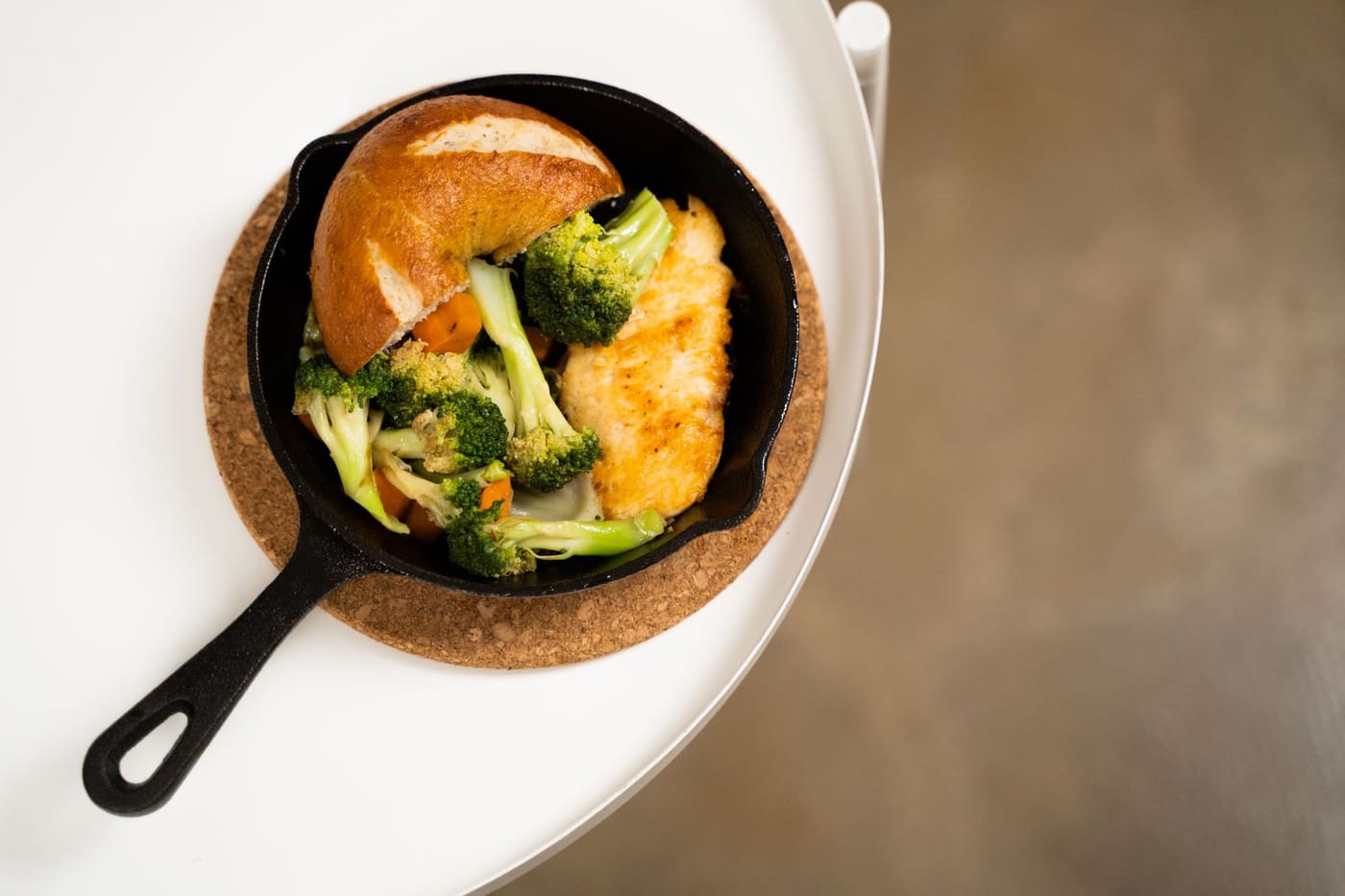
- A skillet protein with a pan sauce (chicken thighs, pork chops, or salmon).
- A sheet pan meal (sausages with broccoli and potatoes).
- A pot of something saucy (chili, curry, or tomato sauce with ground beef).
- A pasta or rice dish you can adjust with whatever vegetables are on hand.
- Eggs, either a frittata or a fried rice with leftover rice.
If you want ideas that fit this pattern, the easy meals list is a good place to pick from. Cook each one at least three times before swapping it out.
Change one variable per attempt
Repeating a meal only helps if you pay attention. Instead of cooking on autopilot, change one thing each time and notice the result.
- Salt the chicken 30 minutes ahead instead of right before cooking.
- Let the pan preheat for 3 minutes over medium-high heat before adding oil.
- Pull the pasta 1 minute before the package time and finish it in the sauce with a splash of starchy pasta water.
- Add acid at the end, such as 1 to 2 teaspoons of lemon juice or red wine vinegar, and taste the difference.
One change per attempt is the point. If you alter five things, you cannot tell what helped. This is the closest thing to a “system” this article asks of you, and it takes no extra time.
Learn the handful of techniques that cover most recipes
A short list of techniques shows up in almost every home recipe. Learning them by name makes any new recipe less intimidating, because you recognize the moves.
- Searing and browning. The Maillard reaction is the browning that happens above roughly 300F (150C) on a dry surface. It is why a seared steak tastes richer than a boiled one. Pat meat dry with paper towels and do not crowd the pan, or the food steams instead of browning.
- Deglazing. After searing, pour in about 1/2 cup (120 ml) of stock, wine, or even water, and scrape up the fond with a wooden spoon. Simmer for a few minutes and you have a pan sauce.
- Roasting. Most vegetables do well at 400 to 425F (200 to 220C) for 20 to 35 minutes, tossed with 1 to 2 tablespoons of oil per pound and a good pinch of salt.
- Simmering. Small, lazy bubbles, not a rolling boil. It keeps beans, braises, and soups tender instead of tough.
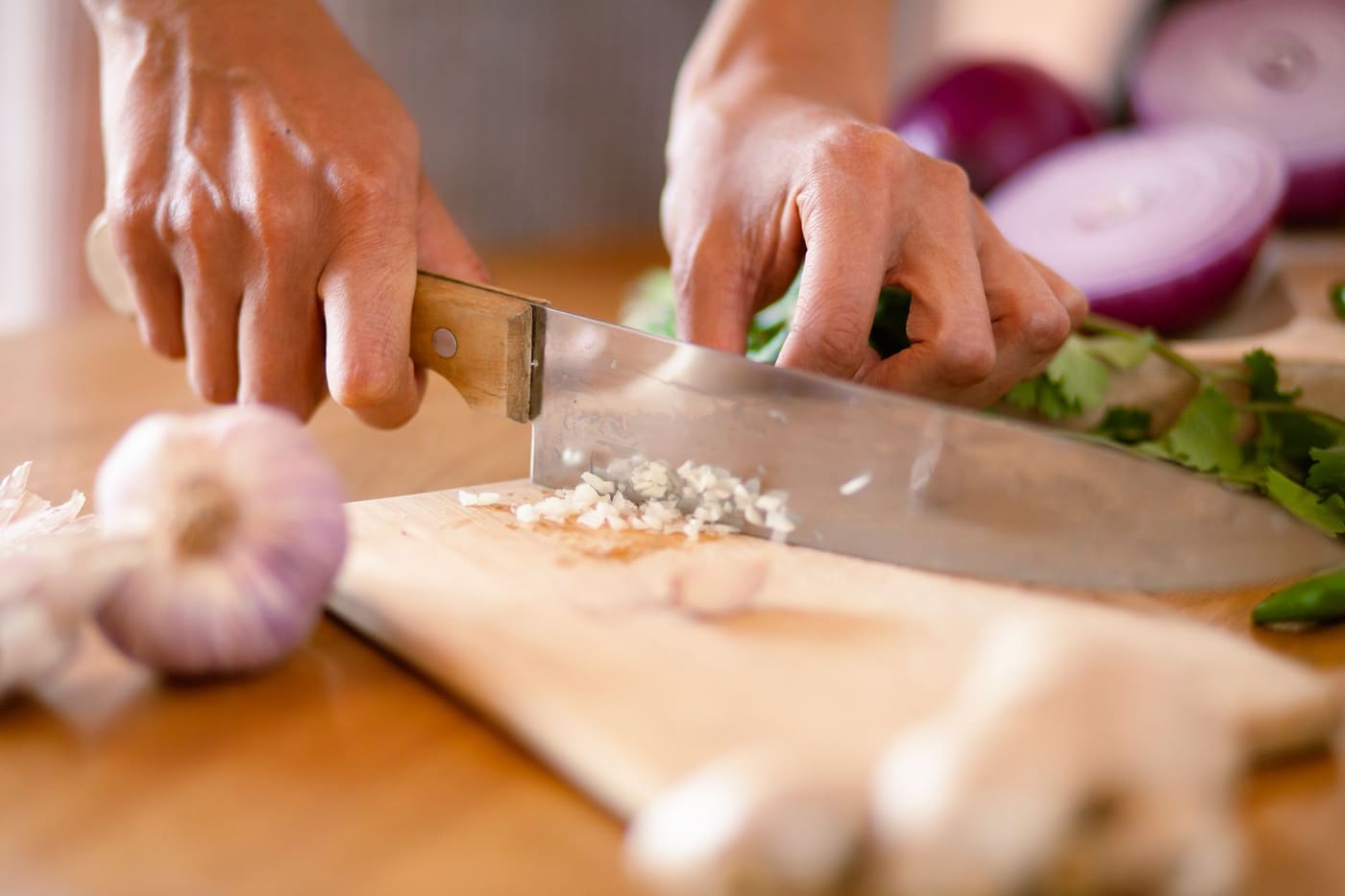
- Mise en place. French for “everything in its place.” Chop, measure, and open everything before you turn on the burner.
The guide to cooking methods every beginner should understand first goes through these in more detail.
Do your prep before the heat goes on
Most beginner mistakes are not skill problems. They are timing problems. You are still chopping an onion while the garlic burns, so dinner tastes bitter and you decide you are bad at cooking.
Mise en place fixes this, and it does not require fancy bowls. Before you light the stove:
- Read the whole recipe once.
- Chop everything and set it on a cutting board or in cereal bowls.
- Get out the salt, oil, and any spices.
- Put a bowl or plate nearby for scraps and a damp towel under the cutting board so it does not slide.
Prep adds about 10 minutes before you start, but it usually saves more than that during cooking, and it removes most of the panic. Panic is the thing that makes people stop cooking.
Taste as you go, and fix what you taste
Tasting is the fastest feedback loop you have. Taste before you season, after you season, and right before you serve. Ask one question each time: does this need salt, acid, fat, or heat?
| If it tastes… | Try adding… |
|---|---|
| Flat or dull | Salt, a pinch at a time |
| Sharp or one-note | A little fat, such as butter or olive oil |
| Heavy or muddy | Acid: lemon juice, vinegar |
| Too salty | Water, unsalted base ingredient, or acid |
| Boring but not bad | Pepper, chili flakes, fresh herbs |
This habit does more for your cooking than any new recipe. If your food keeps coming out bland even though you season it, this breakdown of why food stays bland covers the usual causes, from timing of salt to missing acid.
Buy a few good tools, not a drawer full
You do not need a 20-piece set. A small kit improves results more than gadgets do:
- An 8-inch chef’s knife, about $30 to $50 for a solid stamped one. A sharp knife is safer than a dull one and makes prep faster.
- A 12-inch skillet, either stainless steel or cast iron, roughly $25 to $50 for cast iron. Both brown food well, which thin nonstick pans struggle to do.
- An instant-read thermometer, around $12 to $20 for a basic digital model. It takes the guesswork out of doneness and protects you from undercooked meat.
- A rimmed half-sheet pan, about $10 to $20, for roasting vegetables and proteins.
- A 5 to 6 quart pot or Dutch oven for soups, pasta, and braises.
The thermometer is the one most beginners skip and most regret skipping. The US government’s safe minimum temperatures are 165F (74C) for poultry, 160F (71C) for ground meat, and 145F (63C) for whole cuts of pork, beef, veal, or lamb, followed by a 3-minute rest. For more on what is worth spending money on, see the guide to kitchen tools worth buying as a beginner.
Cook on a schedule you can actually keep
Practice only works if it happens. Think in terms of reps per week, not hours per week. Two or three home-cooked dinners a week is plenty to see progress within a month or two.
A simple structure:
- One new thing per week at most. A new ingredient, a new technique, or a new recipe, not all three.
- One repeat meal. Something you already know, cooked a bit better.
- One easy night. Eggs and toast, a rotisserie chicken with bagged salad, or pasta with jarred sauce. Easy nights are not failures. They keep the habit alive.
If planning is what keeps derailing you, the weekly meal planning guide shows a low-effort way to do it. A rough plan of three dinners beats an elaborate seven-day plan that collapses on Wednesday.
Let mistakes teach you
Overcooked chicken, a burnt garlic bottom, soup you oversalted: these are normal, and each one tells you something specific.
- Dry chicken breast usually means it cooked far past 165F (74C). Check early with a thermometer and take it off the heat as soon as it reaches 165F (74C), instead of cooking by the clock.
- Pale, soggy vegetables usually mean a crowded pan or a cool oven. Use a bigger pan or a second sheet pan.
- Gummy rice usually means too much water or too much stirring. Rinse long-grain rice and use about 1 1/2 cups (360 ml) of water per cup of rice.
- Bitter garlic means the pan was too hot. Add it later and cook only 30 seconds, until fragrant.
Write the fix on a sticky note inside a cabinet door, or in your phone’s notes app. One line per mistake is enough. You do not need a journal.
Leftovers are also a free practice tool. Refrigerate cooked food within 2 hours (1 hour if the room is above 90F), and it keeps for 3 to 4 days in sealed containers. Doubling a recipe gives you lunch and a chance to see how it reheats. If you are cooking mainly to replace delivery, what to cook first when you want to stop ordering out gives a starting lineup.
Where this comes from
The food safety temperatures and storage times here come from the US government’s FoodSafety.gov safe minimum cooking temperature chart and the USDA’s guidance on leftovers. The practice advice is common cooking-instruction practice, not a tested program. Tool prices and store prices change, so check current prices before you buy.