Food usually tastes bland after seasoning because salt is only one of several flavor levers, and it is often added too little, too late, or to food that never developed any flavor to begin with. Fix the timing of your salt, add acid and fat in the right amounts, and get real browning on your ingredients, and the same recipe will taste noticeably stronger without any new spices.
Most bland food is not under-salted by a little. It is missing contrast, depth, or both. The sections below walk through the common causes in the order they tend to matter, so you can taste a flat dish and know which fix to reach for.
You are salting at the end instead of throughout
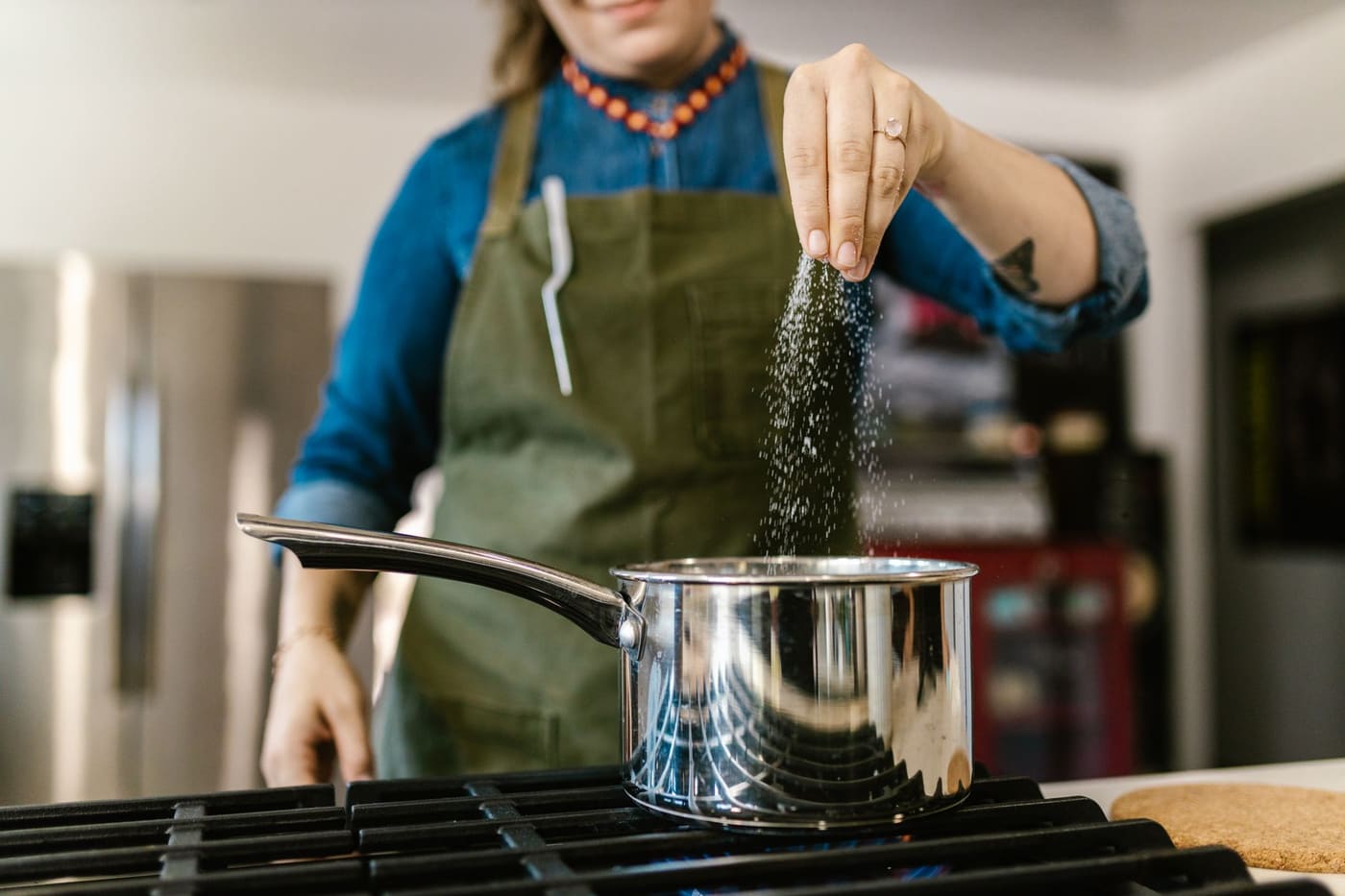
Salt sprinkled on a finished dish sits on the surface. You taste it on the first bite and then the rest of the food tastes plain. Salt added early has time to dissolve and move into the ingredient, so the seasoning is spread through each bite instead of sitting on top.
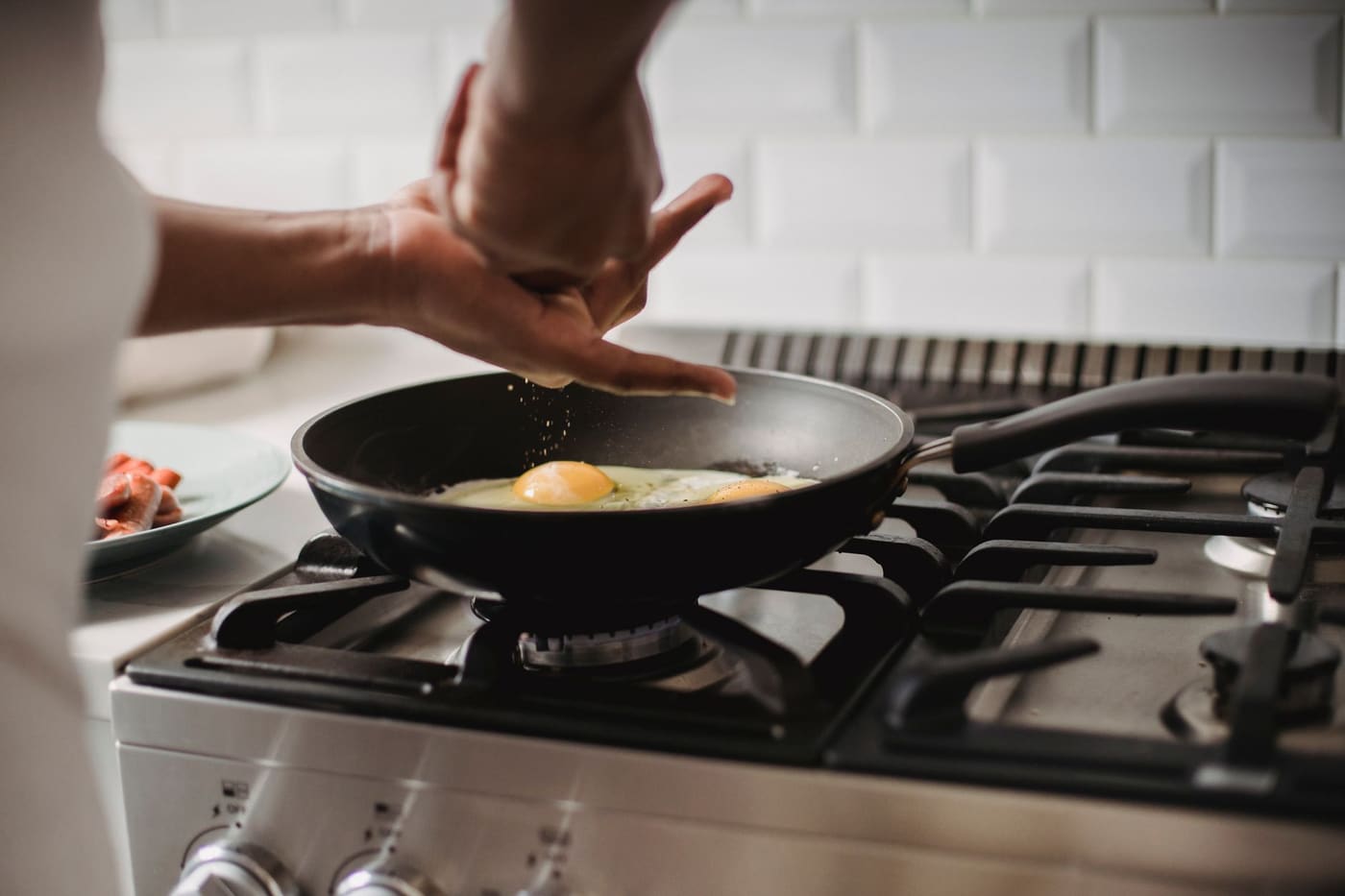
- Meat: Salt steaks, pork chops, and chicken pieces at least 40 minutes before cooking, or up to 24 hours ahead in the fridge, uncovered on a rack. A common starting point is about 3/4 teaspoon of kosher salt per pound (450 g) of meat.
- Vegetables: Salt onions as they begin to soften, not after. Salt roasting vegetables before they go in the oven.
- Pasta and grains: Salt the cooking water until it tastes like mild broth, roughly 1 tablespoon of kosher salt per 4 quarts (about 4 liters) of water. Rice cooked in unsalted water stays dull no matter how you dress it later.
- Soups and sauces: Add a pinch at each stage (after the onions, after the liquid, near the end) and taste between additions.
Season in layers, then make a final adjustment at the end. The final pinch should be a correction, not the whole job.
The amount may genuinely be too low
Home cooks often under-salt because a visible pile of salt looks like a lot. A pot of soup that serves four can take 1 to 2 teaspoons of kosher salt. A pound of ground beef for burgers wants about 1 teaspoon mixed in. If you are measuring in “pinches,” you are probably well under that.
Salt type changes the math. Fine table salt is much denser than flaky kosher salt, so 1 teaspoon of table salt is saltier than 1 teaspoon of a flaky kosher salt, and kosher brands differ from one another too. Pick one salt, use it every time, and you will learn what a teaspoon does.
The test is simple. Taste, add a small pinch, stir, and taste again. When the food stops tasting flat and the flavors seem to come forward, you have enough. If it tastes salty on its own, you went too far.
Salt cannot fix a missing sour note
When a dish tastes salty enough but still dull, the missing piece is usually acid. Acid makes flavors read as brighter and cleaner, and it cuts through richness so heavy food does not feel muddy.
Reach for one of these at the end of cooking:
- Lemon or lime juice: 1 to 2 teaspoons per serving of soup, fish, roasted vegetables, or rice.
- Vinegar: Apple cider, red wine, rice, or sherry vinegar, starting with 1 teaspoon per pot of beans, stew, or braise.
- Tomato or pickled items: Canned crushed tomatoes in a sauce, or a spoonful of pickled onions on tacos.
- Wine: A splash used to deglaze the pan before adding other liquid.
Add acid in small amounts and taste after each one. Too much turns the dish sharp, and you cannot take it back out. A beans-and-rice dinner that tastes like nothing often wakes up with a teaspoon of vinegar and a squeeze of lime, with no extra salt at all.
You skipped browning, so there was no flavor to season
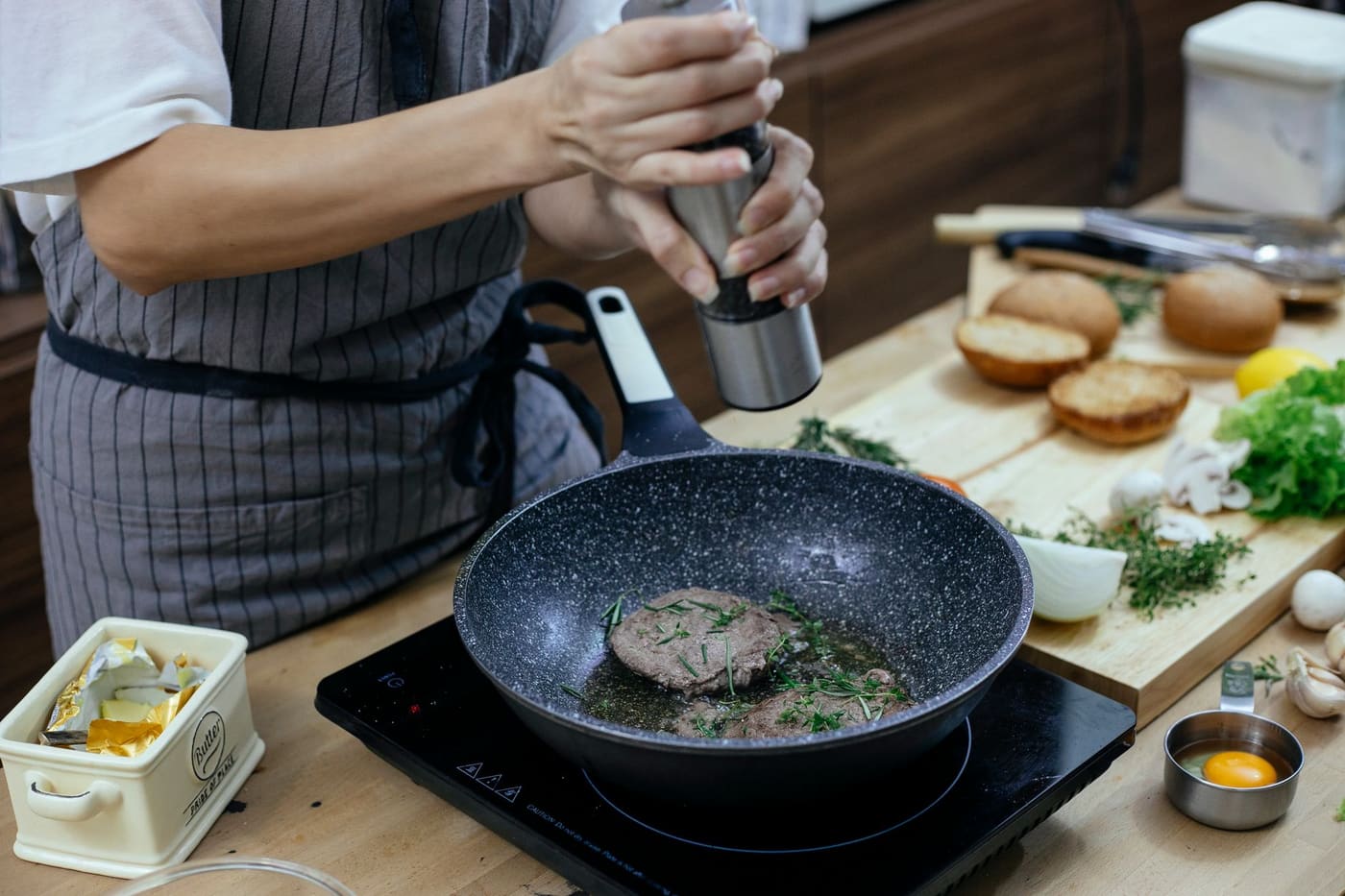
Seasoning enhances flavor that already exists. Pale, steamed, or boiled food has very little to enhance. Browning creates new flavor through the Maillard reaction, which happens when proteins and sugars on the surface of food react at roughly 300F (150C) and above. Water on the surface keeps the temperature at 212F (100C), so wet food cannot brown.
The usual mistakes:
- Crowding the pan. Too much food releases steam, and the pan turns into a simmer. Cook in batches so the pieces do not touch, in a 12-inch stainless steel or cast iron skillet.
- Not drying the food. Pat chicken, steak, and vegetables dry with paper towels before they hit the pan.
- Moving the food too soon. Let it sit until it releases easily, usually 3 to 5 minutes for chicken thighs or burgers.
- Starting with a cold pan. Heat the pan for 2 to 3 minutes, then add 1 to 2 tablespoons of a high-smoke-point oil such as canola or avocado.
Oven roasting works the same way. Vegetables roasted at 425F (220C) on a sheet pan in a single layer brown. The same vegetables crammed together at 350F (175C) steam and taste bland.
Throwing away the fond
Those brown, stuck-on bits left in the pan after searing meat are called fond, and they are concentrated flavor. Many cooks wash them down the sink without realizing it.
Deglazing captures them. After you remove the meat, pour in 1/2 cup (120 ml) of wine, broth, or even water while the pan is still hot, and scrape with a wooden spoon until the bits dissolve. Simmer for a minute or two, whisk in a tablespoon of butter if you like, and you have a pan sauce built from nothing but what was already there. A stainless steel or cast iron pan builds fond well. Nonstick pans tend not to, which is one reason food cooked in them can taste milder.
Missing fat and aromatics
Many flavor compounds dissolve in fat, not water. Fat carries them across your tongue and lets you taste them longer. Very lean cooking with little oil often tastes thin.
Aromatics give a dish a base to build on. Onion, garlic, ginger, celery, and carrots cooked slowly in oil or butter before the rest of the ingredients go in create a savory foundation. Give onions 8 to 10 minutes over medium heat until soft and translucent, and garlic only 30 to 60 seconds, since it turns bitter if it browns hard.
Spices also need heat and fat to work. Ground cumin, paprika, or chili powder stirred into hot oil for 30 seconds (“blooming”) tastes much deeper than the same spice dumped into liquid at the end. Old spices are another culprit. Ground spices lose punch over time, so replace jars that have lost their smell.
Umami and finishing touches fill the gaps
Some dishes taste flat because they lack savory depth. Small amounts of umami-rich ingredients fix this without making food taste like the ingredient itself:
| Ingredient | Typical amount | Works well in |
|---|---|---|
| Soy sauce | 1 to 2 teaspoons | Stir-fries, soups, marinades, even gravy |
| Tomato paste | 1 tablespoon, browned in oil | Stews, chili, pasta sauce |
| Parmesan rind | 1 rind per pot | Soups, beans, tomato sauce |
| Fish sauce | 1/2 to 1 teaspoon | Braises, curries, dressings |
| Miso | 1 teaspoon | Soups, glazes, vegetable dishes |
A finishing step helps too. Fresh herbs such as parsley, cilantro, or chives, added at the end, give a fresh top note that cooking would destroy. A drizzle of olive oil, a pat of butter, or a pinch of flaky salt on top gives the first bite a punch. Many of these items are already in your pantry, and the article on making food taste better with basic ingredients covers a short shopping list.
Temperature and texture change how food tastes
Food served lukewarm tastes duller than the same food served hot, and cold food needs more seasoning than hot food, which is why chilled salads and leftovers often need an extra pinch. Reheat leftovers until steaming. Poultry should reach 165F (74C), and refrigerated leftovers should be eaten within 3 to 4 days.
Texture matters as well. A dish that is all soft, such as rice, beans, and cooked vegetables, feels flat even when well seasoned. Add something crunchy: toasted nuts or seeds, crispy breadcrumbs, raw sliced radishes, or fried shallots. A little contrast makes the whole bowl seem more flavorful.
An instant-read thermometer also helps indirectly. Overcooked chicken breast and pork turn dry and chalky, and dry meat tastes bland regardless of salt. The US government’s safe minimums are 165F (74C) for poultry and 145F (63C) for whole cuts of pork or beef followed by a 3-minute rest, so take the food off the heat once it gets there instead of cooking on by the clock. If you are building your kit, see which kitchen tools are actually worth buying.
A quick diagnosis when a dish tastes flat
Taste the food and ask these questions in order:
- Does it taste like nothing, with no edge? Add salt, a pinch at a time.
- Is it salty enough but heavy or dull? Add acid.
- Does it taste thin or watery? Add fat, or cook it down further.
- Does it taste pale and one-note? Next time, brown the ingredients harder and use the fond.
- Does it lack depth? Add an umami ingredient.
- Does it taste fine but boring? Add fresh herbs or something crunchy.
If you keep running into the same problem, it helps to learn the core cooking methods every beginner should understand, since sauteing, roasting, and searing are where most flavor gets built. A steady habit of tasting as you cook matters more than any single trick, and the broader advice on getting better at cooking without turning it into a project shows how to build that habit in small steps.
Where this comes from
Safe cooking temperatures and the leftover window follow the US government’s FoodSafety.gov safe minimum temperature chart and USDA leftover guidance. The flavor advice (salt timing, acid, browning, fat) is standard home-cooking practice rather than a tested result, and the amounts are starting points to adjust by taste. If food suddenly tastes dull to you across the board, a cold, congestion, or a medication can dull taste, and a doctor is the right person to ask about a lasting change.